
We’re Not Starting From Scratch
By Equipo de PReporta · October 11, 2026
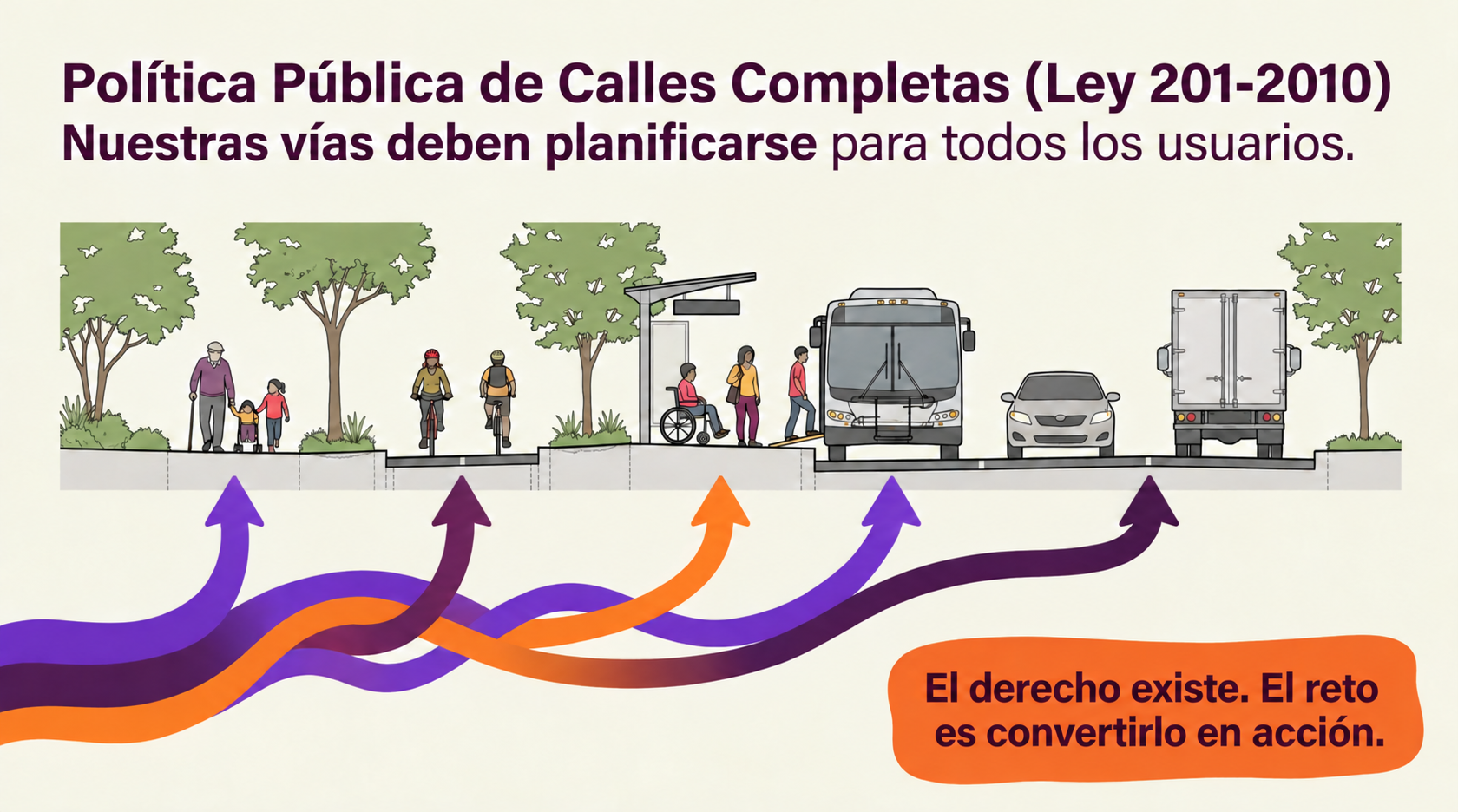
A sidewalk ends without warning. Someone has to walk in the street to reach a bus stop. A crossing has no curb ramp. These barriers directly affect people with disabilities, but they can also affect students, older adults, families, and anyone who walks, bikes, or uses public transportation.
Because streets are shared, conversations about street safety and mobility should not stop with the Americans with Disabilities Act (ADA). What tools can a community use to call for safer streets—even when the concern is not an ADA claim? It helps to understand two different protections: Puerto Rico’s Complete Streets law establishes a public policy for all road users, while the ADA protects the equal access of people with disabilities to government programs and services. These tools can relate to the same street, but they do not serve the same purpose.
The Complete Streets Law: A Policy for All Road Users
Puerto Rico’s Law 201-2010 adopted Complete Streets as public policy. Its goal is for streets to support the safety and mobility of pedestrians, cyclists, people who use public transportation, drivers, and people of all ages and abilities. The law directs the Department of Transportation and Public Works (DTOP), the Puerto Rico Highway and Transportation Authority (ACT), and municipal transportation and road divisions to incorporate this policy into their regulations.
The policy applies to the planning, design, construction, reconstruction, remodeling, and maintenance of public roads. In suburban and rural areas, it applies to roads receiving improvements or new construction when the concept can work in that setting. This means you do not have to be a person with a disability to ask that a street’s different users be considered—including people walking, biking, waiting for the bus, or driving.
What the law allows communities to ask for and what it does not guarantee
The Complete Streets Law gives communities a basis to ask responsible agencies how they considered the policy for a particular road or project. It does not guarantee that every request will lead to immediate construction, nor does it set a deadline to repair every sidewalk.
The law also includes exceptions and criteria for weighing costs. For example, it considers whether walking or cycling is prohibited by law and states that the cost of adding Complete Streets features must not exceed 30 percent of the project’s total cost.
In this context, making a “claim” means asking that the policy be considered, raising questions, and taking part in decisions. It does not guarantee a repair or that an agency will make the exact change requested. What is appropriate depends on the project, the road segment, and any applicable exceptions. A useful request might ask: Who is responsible for this road? What needs of different road users were considered? If a feature was not included, what criteria or exception applied?
The ADA Remains Essential to Equal Access
The ADA—the Americans with Disabilities Act—is a federal civil rights law. Title II requires state and local governments to give people with disabilities an equal opportunity to use government programs, services, and activities. Sidewalks and curb ramps may be relevant to an ADA claim when a barrier prevents someone from reaching or taking part in a public service.
In San Juan, the U.S. Department of Justice became involved in a disability discrimination lawsuit concerning access to sidewalks and curb ramps. The complaint alleged widespread barriers affecting people with mobility disabilities. In 2023, the Department, the Municipality, and the plaintiffs submitted a proposed stipulated order that included evaluating public sidewalks and beginning to address barriers. This is a specific example of how the ADA can apply to sidewalk access. It does not mean that every street defect automatically violates the ADA.
How the Two Tools Can Relate to the Same Street
Imagine a route to a public clinic where the sidewalk is broken and the crossing is difficult to navigate. The Complete Streets Law offers a basis for asking whether the needs of the different people who use that route were considered. The ADA may also be relevant if a person with a disability cannot access a government service because of a barrier along the way.
The laws may apply to the same place, but they address different questions. Complete Streets is a public policy for planning and managing roads for their users. The ADA protects the equal access of people with disabilities to government programs and services. Knowing the difference helps communities describe a concern more clearly and make requests that match the issue.
Comments
You need an account to comment. We ask for this to keep the conversation spam-free.
Log in or sign upLoading comments…