
Before the Lawsuit, There Was a Promise
By Equipo de PReporta · August 20, 2026
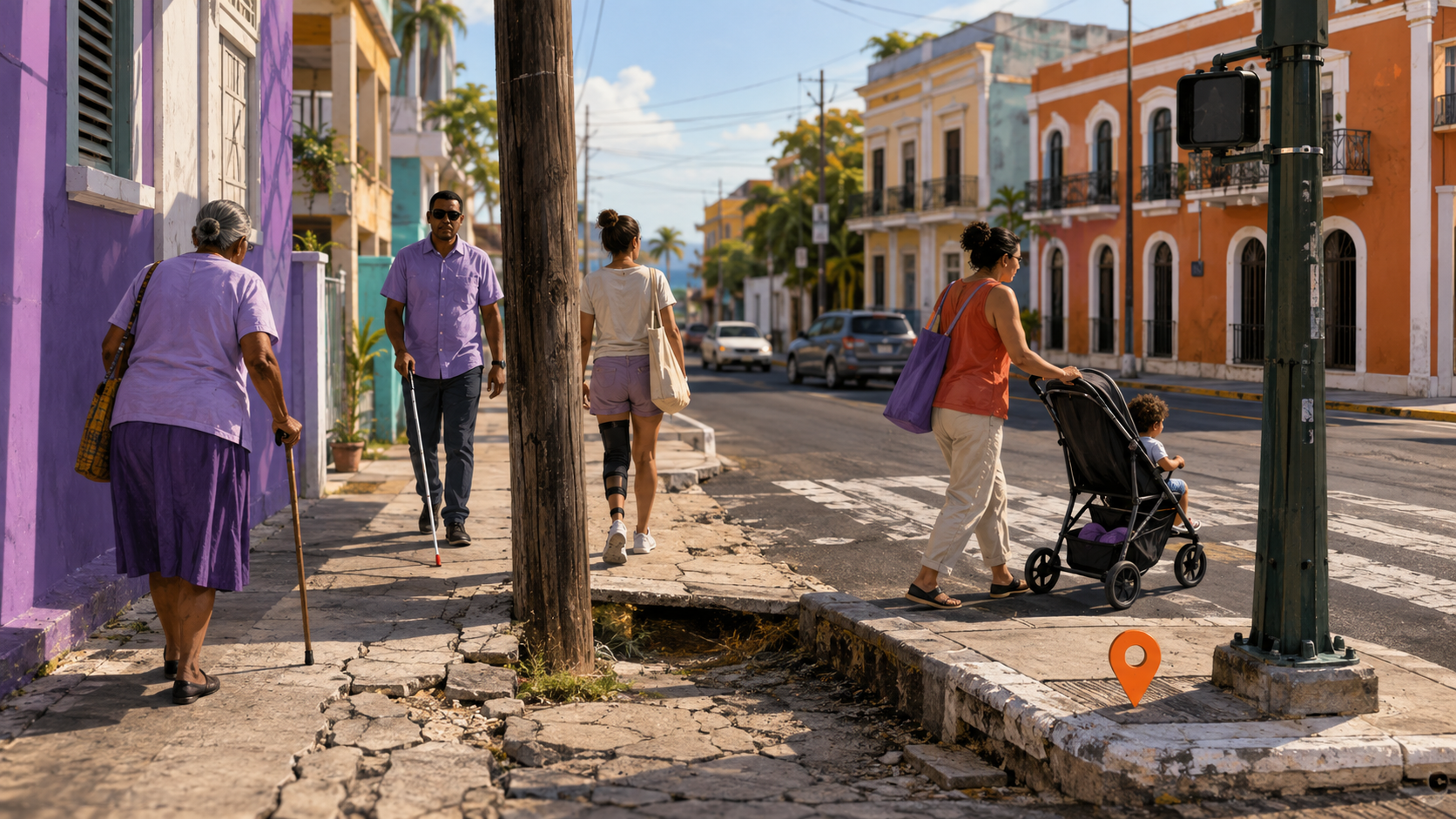
Over the past several years, accessibility-related lawsuits against municipalities and businesses have sparked considerable debate in Puerto Rico. They have also brought accessibility into the headlines. Yet the coverage has not always captured what people experienced before a lawsuit was filed.
Much of the attention has focused on who filed suit, how much money was being sought, and what it would cost to defend a case. There has been extensive discussion of the conflict, but far less about what happened beforehand.
What happened before the lawsuit?
Before judging someone for turning to the courts, we need to ask: What happened before they reached that point?
When we visit municipalities to verify reports submitted through Puerto Rico Reporta, we do more than assess conditions on the ground. We listen to the people who live with these barriers every day.
The locations may change, but many of the stories sound familiar. One person told us:
“The mayor came to my home. He knows what I need. He promised he would address the situation. Now he passes right by me and ignores me.”
What makes this story painful is not only the physical barrier, but the indifference that followed a promise to address it.
The stories people share with us often begin long before anyone considers a lawsuit. There are phone calls, visits to government offices, letters, and conversations with public officials. People explain what they need, trust the promises made to them, and wait.
Then they call again. They ask again. They tell the same story again.
And nothing changes.
Every lawsuit has its own facts, and not everyone follows the same path. But we should not condemn someone for turning to the courts without asking how many times they tried to be heard and how many doors were closed to them.
People are asking for the opportunity to move through and participate in their communities without putting their safety at risk. Accessibility is not a luxury or a favor. It is a right.
Does reporting a barrier encourage lawsuits?
Our work prompted someone to ask us directly: Does Puerto Rico Reporta collect information for attorneys?
I understand why the question arises. After years of headlines about lawsuits, some people may view any effort to document accessibility barriers with suspicion. The question deserves a clear answer.
No. Puerto Rico Reporta does not encourage lawsuits or collect information for attorneys, and it is not affiliated with any attorney or law firm. It is a civic participation tool that gives people a way to report barriers in streets and public spaces throughout their communities.
Reporting a barrier is not an attack or an attempt to provoke conflict. It is a way of saying:
“There is a problem here. Someone is being affected. We have an opportunity to address it.”
A photograph, a description, and a location can bring an overlooked situation to light. Documenting a barrier gives institutions an opportunity to act before the situation worsens—or before going to court begins to feel like the only option left.
Access should not depend on who you know
No one should have to know someone in municipal government to request a sidewalk repair, a curb ramp, a safer crossing, or the removal of an obstruction.
They should not have to visit multiple offices, learn legal terminology, or repeat their story until they finally find someone willing to listen.
The process should be clear. People should know where to submit a request or complaint, who will address it, and when they can expect a response.
Not every barrier can be fixed immediately. But everyone deserves to know that their request was received, what will happen next, and who is responsible for following up.
Silence cannot continue to be accepted as normal.
Without a clear process, requests become informal conversations. Promises are made without deadlines, follow-up is lost, and when staff members change or an administration ends, people have to start over.
The barrier remains. Frustration grows. Trust erodes. And when every other door appears closed, the courthouse may seem like the only one left open.
Acting before a lawsuit becomes the only option
If we truly want to prevent more lawsuits, the answer is to listen carefully, respond clearly, and act promptly when someone identifies a barrier.
Puerto Rico Reporta helps make that possible. We want barriers to be identified and addressed before someone feels they must consider legal action simply to get a response.
Each report documents an experience that matters. It can also help others who use the same route today or will need it tomorrow.
Reporting does not create the problem. The problem already exists. Reporting means refusing to keep treating it as normal.
Change begins when someone points out what we have learned to ignore for far too long. It continues when others listen and decide to act.
Before many lawsuits, there was a reasonable request. There was a known need. There were opportunities to respond and time to act. And far too often, there was a promise that was never kept.
Promises are no longer enough. It is time to listen, respond, and follow through.
What did your municipality promise to do about an accessibility barrier—and what are you still waiting for? Share your experience in the comments.
Comments
You need an account to comment. We ask for this to keep the conversation spam-free.
Log in or sign upLoading comments…