
Where Are Puerto Rico's Barrier-Free Parks?
By Equipo de PReporta · September 4, 2026
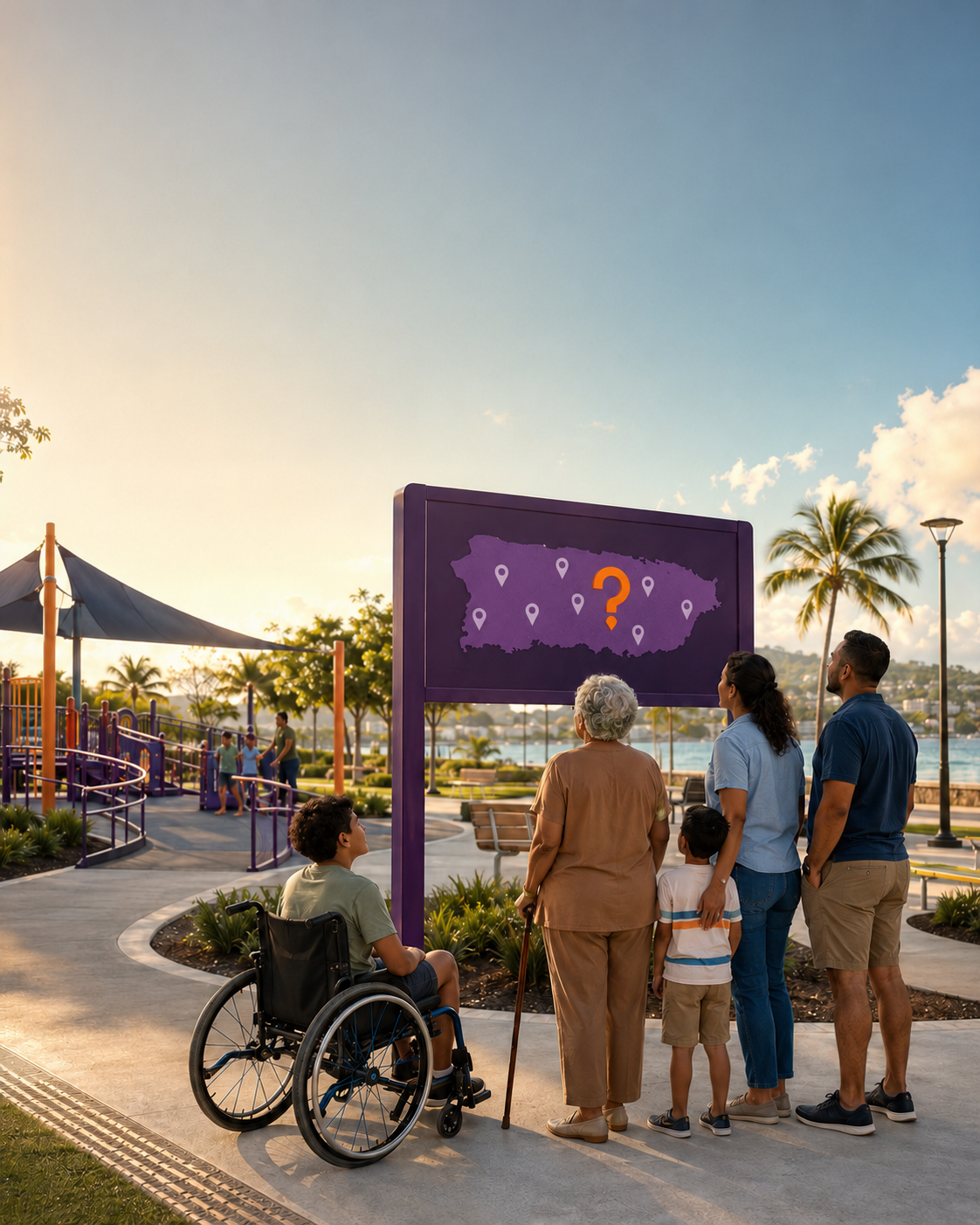
A trip to the park should be simple
A family should be able to visit a park without calling several offices, driving from place to place, or arriving only to discover that someone cannot enter. Before leaving home, families should be able to learn where the park is, whether it is open, and whether the person who needs it will be able to reach its facilities, use them, and participate.
Today, that basic answer is not available in one clear, centralized place. When public information does not allow a family to plan a visit, the lack of information becomes another barrier.
The promise is already on the books
Puerto Rico's Organic Act of the Department of Recreation and Sports requires a barrier-free park in every municipality and directs the Department of Recreation and Sports to establish a five-year plan for achieving that goal. It also states that recreation and sports opportunities should extend across all stages and circumstances of life.
Since 2025, the law has been even more explicit: an inclusive park requires far more than a single adapted swing. It should account for accessible routes, equipment for different needs, sensory experiences, shade, quiet areas, appropriate surfaces, maintenance, and transportation.
The obligation exists. The question is whether the public can verify that it has been fulfilled. In our review of official sources on September 4, 2026, we did not locate a current, centralized inventory identifying the barrier-free park in each municipality. We also did not locate the required five-year plan or consolidated results from municipal facility inspections. This does not prove that the parks or documents do not exist. It does show that families cannot easily find them in the official sources we reviewed.
If the information is public, why is it so hard to find?
The government knows—or should know—which parks it owns, which ones municipalities administer, who maintains them, when they were inspected, and what work remains unfinished. That information should not be scattered across offices, depend on a telephone call, or change according to who answers.
Puerto Rico House Bill 181 seeks to address part of this information gap by creating a municipality-by-municipality registry of parks, recreational facilities, and adapted programs. The Puerto Rico Senate reported that it approved the bill on August 31, 2026. Until the legislative process is complete and a final law is published, however, families cannot rely on the proposed registry as an available public resource.
Puerto Rico's Defensoría de las Personas con Impedimentos (DPI), the government agency responsible for protecting the rights of people with disabilities, supported the registry but noted that no funding had been identified to create, update, and publicize it. The DPI also stated that it planned to inspect municipal facilities during 2025. Families deserve to know whether those inspections were completed and where the results can be found.
Questions the government must answer
Which facility is officially designated as the barrier-free park in each of Puerto Rico's 78 municipalities?
Where is the five-year plan required by law, and what measurable results has it produced?
When was each park last inspected, and which repairs remain unfinished?
Did the DPI complete the municipal inspections planned for 2025, and where were the results published?
Who owns, operates, and maintains each facility?
When will families be able to consult one centralized, accessible, and current registry without calling multiple offices?
Start with one question
Families should not have to prove why recreation matters. Nor should they bear the burden of determining whether the government fulfilled its responsibilities. Public agencies and municipalities are responsible for identifying these parks, reporting their condition, maintaining them, and correcting barriers.
We can begin with one simple question: Where is your municipality's barrier-free park? Ask your municipality. Request the answer in writing. Share it. If no answer comes, that absence also reveals how much work remains.
Puerto Rico Reporta can help bring those responses together and make visible a picture that does not currently exist in one place. This does not replace the government's responsibility. It reminds public officials that accessibility must also be demonstrated through clear information, consistent maintenance, and measurable results.
Planificando juntos, we can turn one public question into an answer that all 78 communities can verify.
Official sources
Act 8-2004, Organic Act of the Department of Recreation and Sports, as amended
Act 70-2025, inclusive recreational spaces
Puerto Rico Senate, approval of House Bill 181, August 31, 2026
Defensoría de las Personas con Impedimentos (DPI), testimony on accessible parks, February 14, 2025
Comments
You need an account to comment. We ask for this to keep the conversation spam-free.
Log in or sign upLoading comments…